 By
By 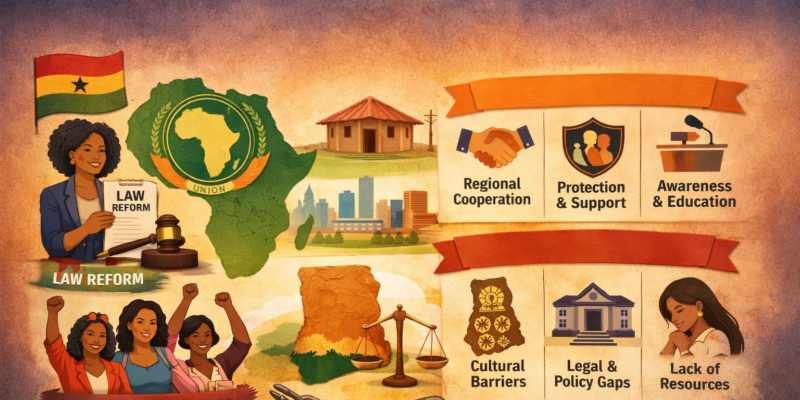
Introduction
Violence against women and girls (VAWG) remains one of the most pervasive and enduring human rights challenges globally. In Africa, the adoption of the African Union Convention on Ending Violence Against Women and Girls (AU-CEVAWG) in February 2025 represented a significant normative shift in the continental response to violence against women and girls. Unlike earlier instruments such as the Convention on the Elimination of All Forms of Discrimination against Women (CEDAW) or the Maputo Protocol, the AU-CEVAWG explicitly addresses violence against both women and girls, while embedding African socio-cultural realities, values, and power structures into its normative logic. Its emphasis on victim-centred justice, gender-responsive budgeting, evidence-based policymaking, and positive masculinity signals an attempt to move beyond declaratory commitments toward transformative change. However, the Convention’s effectiveness ultimately depends on how state parties interpret, adapt, and integrate its provisions into domestic legal orders, policy frameworks, and institutional practices.
Ghana presents a compelling case for examining the domestication of the AU-CEVAWG. While Ghana is yet to ratify the convention, the country has long been regarded as a normative frontrunner in adopting international and regional human rights instruments and has established a range of legal and institutional mechanisms to address gender-based violence. Yet, persistent and in some cases rising incidences of domestic violence, sexual abuse, and harmful traditional practices expose the limits of existing interventions and reveal enduring gaps between policy and lived realities. These contradictions raise critical questions about the adequacy of current frameworks, the political will underpinning enforcement, and the capacity of institutions to respond effectively to evolving forms of violence. Against this backdrop, this article interrogates the prospects of domesticating the AU-CEVAWG in Ghana by analysing both the opportunities it offers and the potential challenges that may constrain its implementation.
Violence Against Women and Girls: What Does it Mean?
The Declaration on the Elimination of Violence Against Women (1993) defines violence against women as physical, sexual and psychological violence
- “occurring in the family, including battering, sexual abuse of female children in the household, dowry-related violence, marital rape, female genital mutilation and other traditional practices harmful to women, non-spousal violence and violence related to exploitation” [Article 2 (a)];
- “occurring within the general community, including rape, sexual abuse, sexual harassment and intimidation at work, in educational institutions and elsewhere, trafficking in women and forced prostitution” [Article 2 (b)];
- perpetrated or condoned by the State, wherever it occurs [Article 2 (c)].
These definitions limit what constitutes violence against women to three issues: physical, sexual and psychological.
The AU-CEVAWG provides a detailed definition of violence against women and girls in Article 1(k), describing it as “all acts perpetrated against women and girls that cause or could cause them verbal, emotional, physical, sexual, psychological, or economic harm, including the threat to take such acts, or to undertake the imposition of arbitrary restrictions on, or deprivation of, fundamental freedoms in the private and public spheres, or in cyberspace, in times of peace, armed conflict, transition, post-conflict, disaster, and post-disaster situations.”
This definition is broad and includes not only direct harmful actions but also threats of such actions. It emphasises that even when acts or threats do not result in actual harm but possess the potential to do so, they still constitute violence. The definition further argues that violence against women and girls can take physical and structural forms and can occur in various contexts, including public, private, and cyberspace settings. Importantly, it asserts that such violence is not justified by the circumstances or times during which the acts are enacted; all instances, irrespective of context, qualify as violence.
Overview of the African Union Convention on Ending Violence Against Women and Girls (AU-CEVAWG)
Prior to the adoption of the AU-CEVAWG, several international and regional frameworks existed to address violence against all persons, including women and girls. These included the Universal Declaration of Human Rights (UDHR), the International Covenant on Civil and Political Rights (ICCPR), the International Covenant on Economic, Social and Cultural Rights (ICESCR), the Convention on the Elimination of All Forms of Discrimination Against Women (CEDAW), and the 1993 Declaration on the Elimination of Violence Against Women. Others included the Optional Protocol to CEDAW, the Convention on the Rights of the Child (CRC) and its Optional Protocol, the United Nations Security Council adopted Resolution 1325 on Women, Peace, and Security and subsequent resolutions. These international legal frameworks emphasise that the elimination of VAWG is integral to upholding human rights globally, and mandate states and regional bodies to address such violence and ensure equal legal protection.
In Africa, the African Charter on Human and Peoples’ Rights (1981) and the Maputo Protocol (2003) provide prohibitions against violence and advocate for gender equality. However, the African Union’s specific legislative framework, the African Union Convention on Ending Violence Against Women and Girls (AU-CEVAWG), was only adopted in February 2025. The AU-CEVAWG imposes obligations on states through Article 5, requiring them to: enact and enforce laws against all forms of violence against women and girls; ensure the criminal justice system provides comprehensive and effective support for victims; conduct regular surveys to guide evidence-based legislation; and apply gender-responsive budgeting to implement the treaty’s provisions.
To aid State Parties in effectively enforcing AU-CEVAWG, Article 6 of the Convention outlines five guiding principles: respect for women’s human rights; a victim-centred approach; inclusive stakeholder engagement; equal application of the law; and the promotion of positive masculinity aligned with African cultural values. Compared to other conventions, the AU-CEVAWG is unique as it addresses violence against both women and girls. Moreover, the convention addresses the unique African context that drives abuses against women and girls and how African values can help in ending violence against women and girls. Furthermore, the convention allows state parties and stakeholders to assess and track progress.
Opportunities for Implementing the AU-CEVAWG
There are existing legal, policy, institutional and community-based mechanisms in Ghana that serve as opportunities for implementing the AU-CEVAWG. These policy frameworks and mechanisms are briefly explained below:
Legal Frameworks
Ghana has robust legal frameworks aimed at prohibiting violence against women and girls while ensuring their protection. The 1992 Constitution is central in this regard, affirming fundamental human rights and guaranteeing gender equality under Article 17. The Criminal Offences Act (Act 29), originally enacted in 1960 and amended by Act 1034 in 2020, criminalises various forms of violence against women, including physical assault and sexual crimes. This is further supported by the Criminal Code (Amendment) Act, 1998 (Act 554), which enhances protections for children and vulnerable individuals by raising the age of criminal responsibility and outlining penalties for sexual offences. The Children’s Act of 1998 (Act 560) safeguards children from abuse and exploitation, promoting their best interests without discrimination based on gender or socioeconomic status.
Additionally, the Domestic Violence Act (Act 732, 2007) addresses gender inequality by prohibiting multiple forms of abuse against women and girls and outlining legal protections for victims, reporting mechanisms, and public awareness initiatives. While men can also face domestic violence, women remain the majority of victims, necessitating continued advocacy and education to combat these issues. Ghana is also a signatory to international legal frameworks that protect women and girls against violence, including the ICCPR, ICESCR, CEDAW, CRC, the African Charter on Human and Peoples’ Rights and the African Charter on the Rights and Welfare of the Child. All these domestic and international commitments obligate the country to conform to the AU-CEVAWG.
Policy Mechanisms
Ghana’s policy landscape features significant frameworks aimed at addressing gender-related issues and child marriage. The National Gender Policy, developed in 2015 and revised in 2025 (2025-2034), focuses on promoting gender equality, empowering women, enhancing their livelihoods, ensuring their rights and access to justice, encouraging leadership and governance, and improving economic opportunities specifically for women. It also includes strategies focused on combating gender-based violence. These strategies include, among others, public education and awareness creation, strengthening the capacity of institutions like the Domestic Violence and Victim Support Unit (DOVVSU), as well as the promotion of legal and policy reforms, girl-child education, and social development and protection programmes such as free ante-natal services for pregnant women, skill training for young women and access to credit through programmes like the Livelihood Empowerment against Poverty. Complementing this, the National Strategic Framework on Ending Child Marriage (NSFECM) for 2017–2026 aims to mitigate child marriage and teenage pregnancy by promoting coordinated interventions across various sectors.
Institutional Mechanisms
Ghana has established institutional mechanisms that can facilitate the implementation of the AU-CEVAWG. Notably, the Ministry of Gender, Children and Social Protection (MoGCSP) spearheads national initiatives for gender equality, protection of vulnerable populations, and advocacy against gender-based violence (GBV). The MoGCSP engages in public education on rights, prevention strategies for domestic and sexual violence, and supports the arrest of perpetrators. Additionally, the Domestic Violence and Victim Support Unit (DOVVSU), formerly the Women and Juvenile Unit (WAJU), addresses domestic and gender-based violence through prevention, protection, and legal action against offenders. The Unit operates under various legal frameworks, including the 1992 Constitution and the Domestic Violence Act of 2007, and collaborates with judicial bodies, Gender Departments, Domestic Violence Secretariat (DV) and organisations like UNFPA-Ghana to support victims.
Ghana also has the Commission on Human Rights and Administrative Justice (CHRAJ), which investigates human rights violations, abuse of power and promotes civil rights. Furthermore, Ghana’s Judicial Service has gender-sensitive courts, including Gender-Based Violence Courts and Child Friendly Model Courts across various regions, including Accra, Tema, Koforidua, Ho, Cape Coast, Sekondi, Kumasi, Sunyani, Tamale and Bolgatanga, ensuring timely prosecution and victim privacy. A One-Stop Centre at the Ghana Police Headquarters provides comprehensive support services for victims, including counselling, legal aid, and shelter. The Legal Aid Commission supports this by providing free or subsidised representation to survivors of domestic and gender-based violence. These institutional efforts aim to empower survivors of gender-based violence, provide psychological support and foster a culture of legal literacy. However, challenges persist due to limited funding, entrenched gender norms, and low public awareness, which discourage reporting of domestic and gender-based violence incidents.
Community-Based and Civil Society Initiatives
There are numerous community-based and civil society initiatives in Ghana aimed at preventing and combating VAWG. The Gender Studies and Human Rights Documentation Centre (Gender Centre) conducts research and engages in advocacy to address VAWG, implementing projects in communities that utilise mobile technology to combat sexual violence and promote safer educational environments. The Centre employs the Rural Response System (RRS), developed in 2002, to change community attitudes towards domestic violence and VAWG. The Community-Based Action Teams (COMBAT) initiative builds on the RRS approach, mobilising communities to raise awareness and prevent VAWG and coordinate responses to support survivors. An evaluation of COMBAT revealed over 50% reduction in instances of reported cases of physical and sexual intimate partner violence (IPV) across four districts in Ghana, including Agona, Upper Denkyira, Abura Asebu Kwamankese and Komenda Edna Eguafa/Abirem (KEEA).
Civil society organisations (CSOs) such as WANEP, ActionAid Ghana, Ark Foundation, FIDA Ghana, AWLA, LAWA, Gender Centre, Feminine Star Africa and WiLDAF contribute significantly to community education on gender-based violence (GBV) and provide essential services, including shelters and legal aid. Feminine Star Africa in particular is working to establish a women-led Domestic Violence Shelter in the Volta Region to promote survivor rehabilitation and empowerment. CSOs often engage in activism against various forms of GBV, including murder, rape, and witch branding, advocating for legal protections and increasing awareness in rural communities. ActionAid Ghana particularly focuses on empowering women and has implemented numerous initiatives to safeguard women’s rights, such as providing their basic needs, closure of alleged witch camps, formation of the alleged witches’ Reintegration Committee and advocating for comprehensive policies to combat GBV. These collective efforts from CSOs represent important steps toward enforcing the AU-CEVAWG, enhancing the protection and participation of women and girls in governance and community decision-making.
Potential Challenges for Implementing the AU-CEVAWG
The adoption of the AU-CEVAWG represents a historic step toward a legally binding continental framework for eliminating gender-based violence. While in Ghana, the new Convention strengthens its commitment to end VAWG, translating it into meaningful local action requires navigating several structural, institutional, and socio-cultural challenges. Some of these challenges are discussed below:
Legal and policy gaps
Ghana’s existing legal and policy frameworks do not fully cover the AU-CEVAWG’s expanded scope, particularly in areas such as cyber-violence, conflict-related violence, and gender-responsive budgeting.
A recent research on survivors’ experiences with support services in Ghana revealed that despite the existence of protective laws, many survivors of domestic violence who accessed formal support services often felt disempowered by those services. Even where laws exist, they are not fully operationalised in practice. For example, in November 2025, a woman captured on a viral video being assaulted by her husband accused the police of failing to act despite making several reports of abuse to them. This has led to the woman distrusting the police and being unwilling to report further abuse by the husband until the exposure of her suffering by a bystander. This emphasises the importance of bystander reporting in combating VAWG.
Furthermore, child marriage and Female Genital Mutilation persist in various parts of the country. For example, in March 2024, a 12-year-old was married to a 63-year-old Ga traditional Priest. While the practice was widely condemned, the Gborbu Wulomo temple defended that the marriage of the 12-year-old girl is a spiritual practice of the Ga Dangbe tradition.
In Northern Ghana, women accused of witchcraft continue to be violently and inhumanely treated, banished and confined to ‘witch camps’. For example, Akua Denteh, a 90-year-old woman from Kafaba in the Savannah Region, was killed in 2020 after being accused of witchcraft. Also, an elderly woman was beaten to death at Nalerigu in the North East Region on accusations of witchcraft. A similar incident in 2023 led to the death of a 60-year-old woman at Bunbuna in the Yunyoo/Nasuani district.
To address these, the Anti-Witchcraft Bill was passed by Parliament in July 2023, but it was not signed into law by former President Nana Addo Dankwa Akufo-Addo, who raised constitutional concerns with the Bill. Ghana’s failure to sign the Anti-Witchcraft Bill into law questions its commitments at the international level to implement measures to end violence against women and girls. Without a law that criminalises witchcraft accusations, witch doctors or hunters, and the creation of witch camps, many women remain vulnerable to violence, inhumane and degrading treatment, on allegations of being witches.
Limited political will and delays in institutionalisation
Ratification and domestication processes often suffer from bureaucratic bottlenecks and national priorities. Although Ghana has made progress in passing gender-related laws, weak political commitments and a lack of clear implementation roadmaps have often undermined their impact. The country’s previous experience with the Maputo Protocol and the Domestic Violence Act shows that, despite initial enthusiasm, policy momentum can decline without sustained high-level commitment. Advocates have recently called for decisive action to implement the Domestic Violence Act, citing institutional weaknesses and cultural norms that entrench violence. Moreover, studies have shown that the implementation of transformative policies related to gender relations remains arduous and fragmented compared to general laws. Without concrete timelines, clear inter-ministerial coordination and political will, ratification and domestication of the AU-CEVAWG risks being delayed, leaving the Convention’s aspirations unrealised.
Resource and funding constraints
Limited financial resources obstruct the elimination of VAWG. The Domestic Violence Victims Support Fund, established under the Domestic Violence Act (Act 732, 2007), remains severely under-resourced. The 2025 national budget recorded an 87.66% reduction in allocation to the Domestic Violence Victims Support Fund compared to 2024. This chronic underfunding undermines the operation of shelters, legal aid services, public education, and support systems for survivors, all of which are critical pillars of AU-CEVAWG implementation. Without a gender-responsive and adequately funded approach, Ghana may struggle to meet its obligations under the Convention.
Institutional capacity limitations
Institutions like DOVVSU and the Department of Social Welfare encounter logistical, personnel, and training challenges that impede their provision of survivor-centred, trauma-informed responses and justice delivery. DOVVSU offices in various regions in Ghana lack essential facilities, such as forensic testing kits, safe interview rooms and transportation. These capacity gaps necessitate institutional strengthening for the effective implementation of AU-CEVAWG at both national and district levels.
Cultural and social barriers
Deep-rooted patriarchal and societal norms, as well as victim-blaming and social stigma, remain significant obstacles to the implementation of AU-CEVAWG. Patriarchal and societal norms influence both the acceptance and justifications of violence against women and girls. An example is the practice of female genital mutilation and child marriages. Communities that continue to engage in these practices that violate women’s dignity see them as part of their cultural values. For example, a 63-year-old Ga traditional priest justified his marriage to a 12-year-old girl in March 2024 on the grounds of promoting the tenets of the Ga Dangbe tradition. Similarly, a baseline survey conducted by UNFPA in Northern Ghana revealed the persistence of FGM in districts like Wa East, Sawla Tuna-Kalba, and Kasena-Nankan West, and about 29% of the respondents supported the practice of FGM as a cultural practice. Sadly, although the AU-CEVAWG listed African values as one of its guiding principles for implementation, it failed to define what African values mean. This failure has the potential to create a vacuum where violence would continue to be perpetrated against women and girls under the guise of promoting traditional norms and values.
Furthermore, cases of abuse in many communities are still mediated through traditional or religious leaders, where reconciliation is often prioritised over justice. Even though customary systems are not to be demonised, they are used in some instances to minimise abuses or even blame victims. This has led to the unwillingness on the part of some survivors to report suspects, particularly due to family ties and relations. However, it is also important to note that services such as shelters and psychosocial support remain concentrated in urban areas, leaving rural survivors without access to protection or justice.
Research has also shown that intimate partner violence (IPV) justification is intertwined with socio-economic disparities, evidenced by 28.2% of women in Ghana endorsing wife-beating. The likelihood of this justification is significantly higher among women with a lower education level and those living in poverty. This suggests that insufficient education and a lack of awareness about gender-based violence contribute to the normalisation of IPV, which invariably perpetuates cycles of silence and impunity.
Weak data and accountability systems
Although Ghana has launched a Domestic Violence Information Portal to centralise reporting, coordination among agencies such as the police, health, and social welfare remains fragmented. Furthermore, many incidents of VAWG are unreported due to stigma, ignorance and distrust of authorities. This can hinder the country’s ability to gather reliable data to design evidence-based interventions to address VAWG. Similarly, inconsistent data can make it difficult to monitor progress, assess survivor outcomes, or hold institutions accountable.
Ensuring Commitments, Partnerships and Collective Action
Effective implementation of the AU-CEVAWG commitments in Ghana requires a coordinated, multi-stakeholder approach anchored in strong political will, institutional reform, and sustained partnerships. This includes aligning national laws and policies with the Convention through legislative audits, developing a clear national action plan with timelines for ratification and domestication, and ensuring transparent, gender-responsive financing. Strengthening institutional capacity through continuous training in survivor-centred approaches, expanding access to support services nationwide, and promoting long-term social norm change through national campaigns, particularly by engaging men, boys, and community leaders, are critical for lasting impact.
Equally important is establishing robust monitoring and accountability systems, including annual reporting, disaggregated data collection, and independent oversight involving civil society and research institutions. Through collective action across government, civil society, academia, traditional authorities, and international partners, Ghana can effectively advance its commitments and reinforce its leadership in promoting women’s rights in West Africa.
AUTHORS
 Elsie Anato Programme Officer, Peace Monitoring Centre (PMC), WANEP |
 Chrispin Mwinkyogtaa Kuupiel Ph.D. Candidate, Department of Peace Studies, School of Development Studies University of Cape Coast, Ghana |
Disclaimer: The views expressed in this publication are those of the authors and not necessarily those of WANEP. While every attempt has been made to ensure that the information published is accurate, no responsibility or liability is accepted for any loss, damage or disruptions caused by errors or omissions whether such errors or omissions result from negligence, or any other cause.


Comments